





Drip vs overhead irrigation for vineyards is a key decision that directly impacts vine health, grape quality, and water efficiency. Efficient water use is a cornerstone of sustainable vineyard management, especially in regions like Sonoma County where rainfall can be unpredictable.
Choosing the right irrigation system can make a significant difference in vine health, fruit quality, and long-term vineyard sustainability. For more details on efficient irrigation practices, see the UC Davis Viticulture & Enology Resources guide.
At Clendenen Vineyards, we’ve worked extensively with both systems, and in this guide, we share our insights and recommendations to help vineyard owners make the best choice.
Table of Contents
- Understanding Vineyard Irrigation Needs
- Drip Irrigation: Precision and Efficiency
- Overhead Irrigation: Simplicity and Coverage
- Hybrid Approach: Best of Both Worlds
- Sustainability and Water Stewardship
- Final Thoughts
Drip vs Overhead Irrigation for Vineyards: Pros and Cons
1. Understanding Vineyard Irrigation Needs
Every vineyard is unique. Before choosing an irrigation system, consider:
- Soil composition: Sandy soils drain faster than clay soils.
- Vine spacing and rootstock: Shallow-rooted vines may need more frequent watering.
- Climate patterns: Hot, dry regions require more precise water management.
- Water source and quality: Mineral buildup can affect both systems differently.
Pro Tip: Conduct a soil moisture audit each season to understand your vineyard’s true irrigation needs before investing in upgrades.
2. Drip Irrigation: Precision and Efficiency
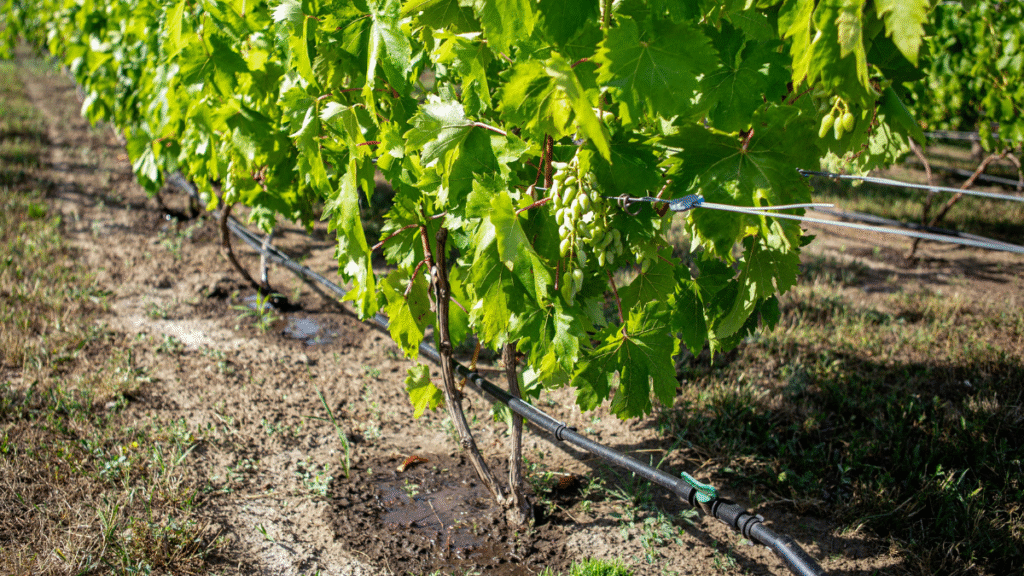
Drip irrigation delivers water directly to the vine roots, reducing evaporation and runoff. Learn more about best irrigation practices from the USDA Vineyard Irrigation Guide.
Advantages:
- Water Efficiency: Minimizes evaporation and runoff — ideal for drought-prone regions.
- Precision Control: Customizable emitter flow rates for different blocks or soil types.
- Disease Prevention: Keeps foliage dry, reducing mildew and rot risk.
- Ease of Automation: Compatible with moisture sensors and smart irrigation technology.
Disadvantages:
- Higher Initial Cost: Installation can be expensive.
- Clogging Issues: Mineral buildup or debris can block emitters.
- Maintenance: Requires regular flushing and system checks.
At Clendenen Vineyards, we favor drip irrigation for its efficiency and ability to deliver water exactly where the vines need it.
3. Overhead Irrigation: Simplicity and Coverage
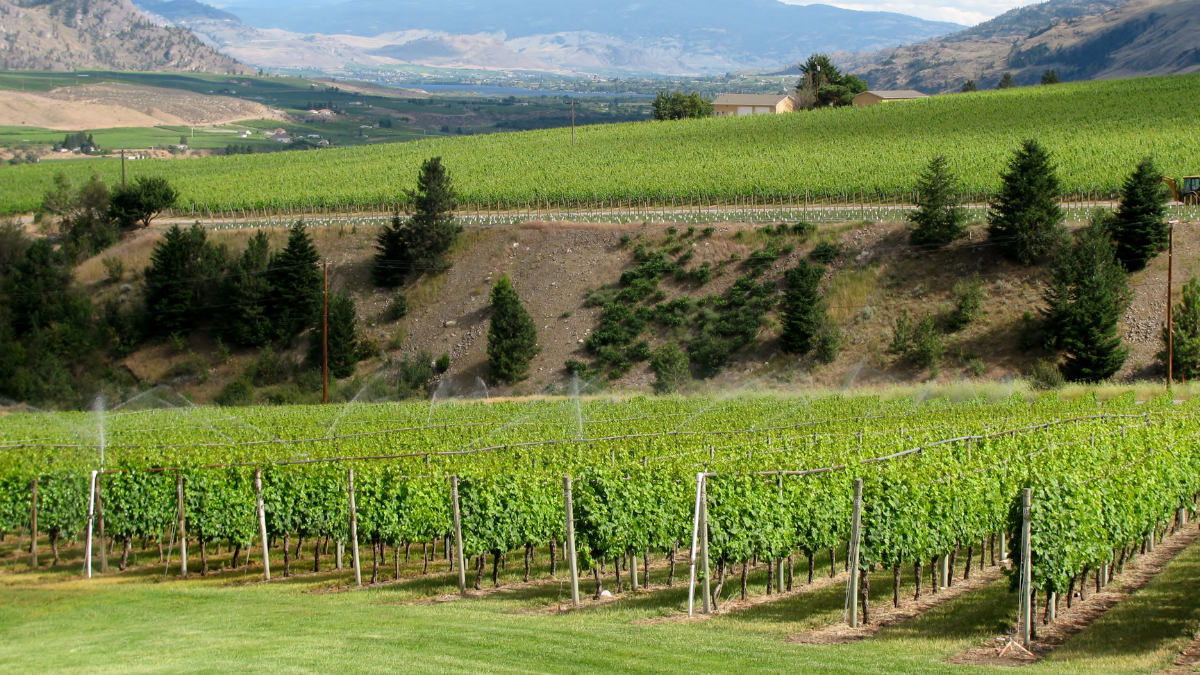
Overhead irrigation sprays water above the vines through sprinklers or misters.
Advantages:
- Uniform Coverage: Useful for young vines and establishing new blocks.
- Frost Protection: Can raise temperatures slightly during frost events.
- Cooling Effect: Helps reduce heat stress during extreme temperatures.
Disadvantages:
- Water Waste: Significant evaporation and wind drift loss.
- Increased Disease Risk: Wet leaves promote mildew and rot.
- Less Targeted: Can waste water between vine rows.
Overhead irrigation is best used strategically — not as a full-season system, but as a supplemental tool for frost control or extreme heat days.
4. Hybrid Approach: Best of Both Worlds
Many modern vineyards adopt a hybrid system — drip lines for precision watering and overhead sprinklers for occasional frost protection.
- Drip for daily irrigation
- Overhead for frost mitigation and canopy cooling
This combination ensures vines stay hydrated efficiently while protecting against weather extremes.
5. Sustainability and Water Stewardship
Sustainable irrigation is about more than technology — it’s about using water responsibly.
At Clendenen Vineyards, our approach includes:
- Regular soil moisture monitoring
- Using mulch and cover crops to retain soil moisture
- Investing in smart irrigation systems that track weather and soil data in real-time
By managing water efficiently, we not only improve vine health but also reduce our environmental footprint.
6. Final Thoughts
When choosing drip vs overhead irrigation for vineyards, consider soil type, climate, and vine age.
- Choose drip irrigation for precision, water conservation, and disease prevention.
- Use overhead systems for specific needs like frost protection or canopy cooling.
The key is balance — using the right tools for the right conditions to maintain healthy vines and exceptional fruit quality.
By understanding the benefits of each system, vineyard owners can make informed decisions for their vines. Additional guidance is available through the UC Davis Viticulture & Enology Resources website.
At Clendenen Vineyards, thoughtful irrigation practices help us craft wines that reflect both the land and the care we put into every vine.